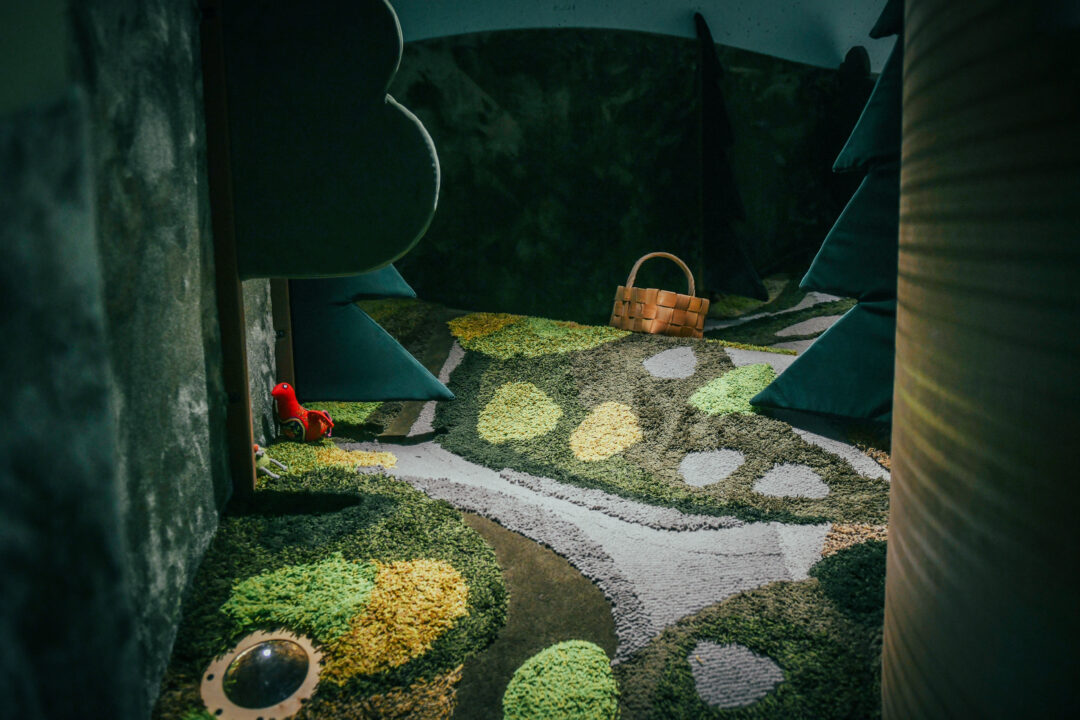
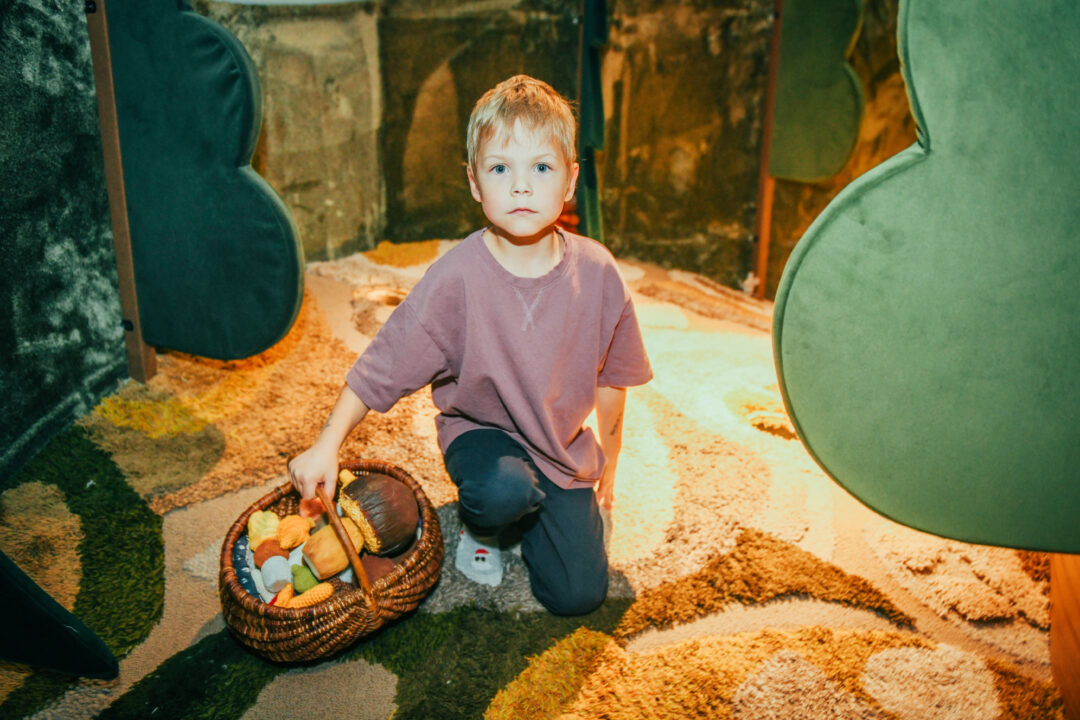
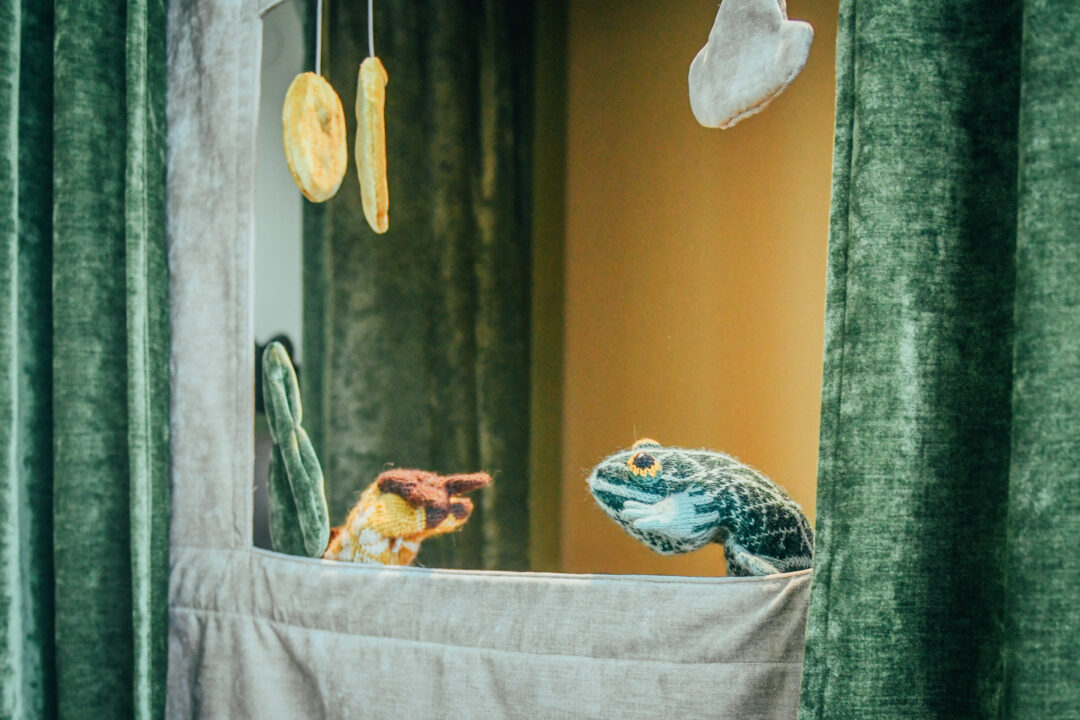
In the Magical Forest, children can pick mushrooms and berries, meet forest creatures, chat with the Serpent King, and find shelter in a cave or at the World Tree. Here they can put on theatre, read books, and take part in crafting mornings and fairy-tale mornings. The Magical Forest is primarily intended for children up to the age of 8.
Every Tuesday at 11:00 – fairy-tale mornings
Every Saturday at 11:00 – crafting mornings
The Magical Forest opening hours
Tue–Fri 11:00–18:00
Sat–Sun 10:00–18:00
Group bookings: Tue–Fri 10:00–11:00
Information and bookings: hariduskeskus@erm.ee
Please don’t come to Magical Forest if you are unwell. We care about everyone’s health!
We welcome children to the Magical Forest in socks.Socks can be purchased at the ENM information desk and shop for €2 per pair (currently available up to size 37).
Price list for visiting only the Magical Forest:
Please note: Entry to the Magical Forest is free with a valid ENM exhibition ticket, and also for visitor groups entitled to free admission to ENM exhibitions, including holders of the Museum Card. The pensioner discount and partner discounts do not apply in the Magical Forest.
- Adults: €3
- Children and students (ages 3–18): €4
- Family ticket (up to 2 adults and their underage children): €10
- Kindergarten and school groups: €2 per child
- Educational programme in the Magical Forest: €4 per child
Target group: kindergartens, 1st grades
Duration: 60 minutes
Price: €4 per child
Time: Tue–Fri 10:00–11:00
At the fairy-tale morning we read a story, play, and do crafts. You can choose the fairy tale from the list here, or let the museum educator surprise you!
Selection:
- “The Three Little Pigs” (ages 3–5). Three brothers live a happy piggy life. There’s nothing to do but lounge in the mud and play! One day the weather turns cold and they must think about a winter home. Moral: be diligent and hardworking—life is hard for the lazy.
- “The Bun” (Kakuke) (ages 3–5). The little bun runs away from everyone, but believes the sly fox’s pretty words—and the fox eats it. Moral: don’t be so gullible!
- “The Tar Bull” (ages 3–7). An old woman and an old man take their tar-covered little bull to the forest to eat from a haystack. But the forest animals don’t like that idea very much… Moral: if you do good to others, they will help you too.
- “How Animals Got Their Tails” (ages 3–7). The Lord of the Forest decided to give animals tails. Who got what—and how did it all happen? Moral: never lose hope; there is always a way out!
- “Mole’s Trouble” — Holger Pukk (ages 3–7). A young mole starts digging a tunnel. Everything goes well until she hits a big rock. What now? There are so many options that she decides to ask her friends for advice. Moral: ask wiser people for advice, but make the final decision yourself.
- “Ütsi-ütsi, Little Sister” (ages 3–7). One evening, going to the sauna gets delayed too long and the poor orphan girl arrives only at night. Hoofbeats behind the door signal that the Old Heathen has come to find a bride for his son. Luckily, a little mouse is there to help the girl! Moral: cleverness will take us much further in life than greed.
- “The Cat, the Bread Paddle, and the Ball of Flax” (ages 4–8). Three poor sisters receive a bread paddle, a cat, and a ball of flax as gifts from their parents. They decide to divide them among themselves and set off into the world to seek their fortune. Moral: with ingenuity, even simple things can help you overcome troubles.
- “Larry the Lion and Jassy the Hare” (The Golden Book of Estonian Fairy Tales) (ages 4–8). A story about how a lion went to the doctor with a toothache. Moral: fear makes things seem bigger than they are—and bold initiative is half the victory.
- “My Bear” — Salme Raatma (ages 5–8). Two toy bears meet: one new and splendid, the other old and dirty. But which one is truly happy and joyful? Moral: joy comes from having friends!
Architecture: Kaari Metslang, Liisi-Ly Viitkin – Ruumimeister OÜ
Graphic design: Marja-Liisa Plats
Implementation: Estonian National Museum, Monika Järg, Eero Ehala
Thanks to: the National Heritage Board and the Museums Accelerator call for applications